
Asbestos Testing and Lab Analysis in Wilkes-Barre
EnviroGuard Asbestos Services collects and analyzes building material samples to confirm whether asbestos is present before you renovate, demolish, buy or sell. Our inspectors are licensed, our labs are accredited, and our reports stand up to contractors, insurers and code officials. Call (570) 227-8650 to schedule sampling.
Asbestos testing is the collection and laboratory analysis of suspect building materials to determine whether they contain asbestos fibers above one percent. It serves homeowners, landlords, buyers and contractors planning renovation or demolition. EnviroGuard Asbestos Services performs inspections, bulk sampling and air monitoring throughout Wilkes-Barre, PA.
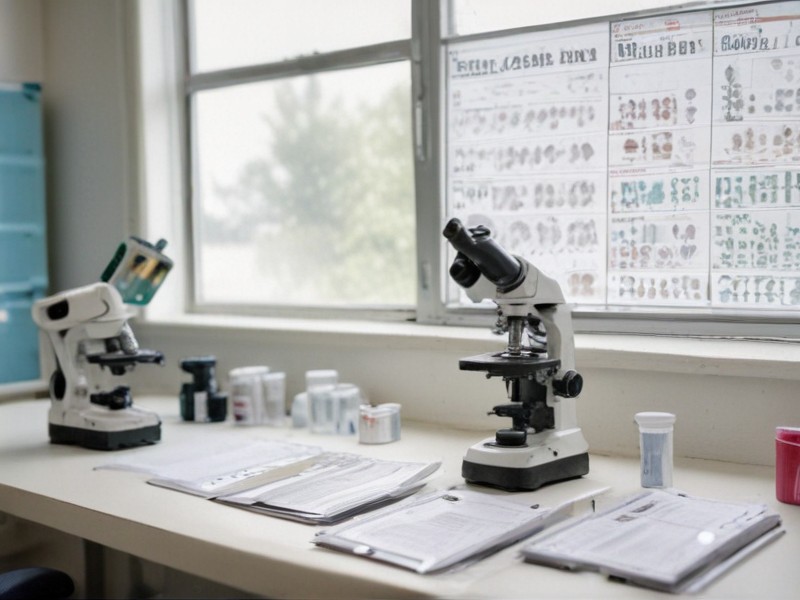
Asbestos testing answers one question with certainty: does this material contain asbestos, and at what concentration. No inspector can tell by sight alone. Floor tile, sheet flooring backing, pipe and boiler insulation, textured ceilings, window glazing, roofing felt, siding shingles, joint compound and plaster all looked identical whether or not asbestos was added, and asbestos appeared in building products well into the 1980s. Only a laboratory can settle it.
The problem testing solves is risk taken blindly. Homeowners tear out a bathroom floor and release fibers through the whole house. Contractors refuse to start work without documentation. Buyers walk away from a sale over an unknown pipe wrap in the basement. Demolition permits stall because no survey exists. In every case the cost of testing is a fraction of the cost of guessing wrong, and far less than cleaning up after an uncontrolled disturbance.
EnviroGuard Asbestos Services exists to give you a defensible answer fast. Our inspectors are Pennsylvania-licensed and trained in building-materials identification, so samples get pulled from the right homogeneous areas rather than at random. We use independent NVLAP-accredited laboratories, which means the party testing your material has no stake in whether abatement follows. You receive a written report with sample locations, material descriptions, percentages by analyte and clear conclusions, plus a plain-English explanation of what your options are. If the result is negative, we say so and you move on.
What Our Asbestos Testing Service Covers
A testing project begins with a walkthrough of the areas you plan to disturb, or the whole structure if a full pre-demolition survey is required. The inspector identifies homogeneous areas, meaning groups of material that are uniform in color, texture and apparent date of installation, and determines how many samples each area needs. Regulatory protocol calls for a minimum of three samples from surfacing materials such as textured ceilings and plaster, two from thermal system insulation like pipe wrap and boiler jacketing, and generally one to two from miscellaneous materials such as floor tile, mastic, roofing or siding.
Samples are cut with wetted tools to suppress dust, sealed in labeled containers, and the sampled spot is patched or encapsulated. Chain-of-custody documentation travels with every sample. Bulk materials are analyzed by polarized light microscopy with dispersion staining, the EPA reference method, which identifies fiber type and estimates percentage. Non-friable organically bound materials such as floor tile and mastic that read negative under PLM can be confirmed by gravimetric reduction or transmission electron microscopy when a definitive answer matters.
Air testing uses calibrated pumps drawing a known volume through mixed-cellulose-ester cassettes, analyzed by phase contrast microscopy for occupational-style counts or by TEM for clearance after abatement. We also perform dust and soil sampling where materials have already been disturbed, and visual condition assessments for operations and maintenance planning.
Typical timelines: field sampling for a single-family home takes one to three hours. Standard laboratory turnaround is three to five business days, 24-hour rush is available, and same-day PLM can usually be arranged for emergency demolition schedules. Air clearance samples under TEM generally return within 24 to 48 hours because the work area cannot be released until counts are in hand.
Included in every project: inspector licensing documentation, a sample location log, laboratory analytical sheets with chain of custody, a written summary report, and a consultation explaining whether the material must be removed, can be encapsulated, or can safely be left in place and managed. Reports are formatted for submission to permit offices, lenders and abatement contractors.
Benefits of Professional Asbestos Testing
Independent, Unbiased Results
Samples go to NVLAP-accredited third-party laboratories rather than an in-house bench. The lab has no financial interest in whether removal follows, so a negative result is a genuine negative. You get an answer you can act on, not a sales pitch dressed up as an analytical report.
Permit-Ready Documentation
Reports include inspector license numbers, sample location drawings, chain-of-custody records and laboratory data sheets in the format code officials and demolition permit reviewers expect. That prevents resubmittals, stalled permits and last-minute delays when a contractor arrives and asks for paperwork you do not have.
Correct Sampling Protocol
Licensed inspectors identify homogeneous areas and pull the required number of samples per material type. Undersampling is the most common reason a report gets rejected or a hidden asbestos layer is missed, and it usually costs more to correct afterward than to do properly the first time.
Fast Turnaround Options
Standard analysis returns in three to five business days, with 24-hour rush and same-day options when a demolition crew or closing date will not wait. Scheduling flexibility keeps renovation timelines intact instead of forcing a week of idle labor and equipment on site.
Testing Before Spending
Many suspect materials test negative. Confirming that first can eliminate an abatement budget entirely, or narrow removal to a single room instead of a whole floor. The modest cost of analysis routinely prevents thousands in unnecessary containment and disposal work.
Full Scope of Analysis
Bulk material sampling, air monitoring, dust and soil testing, post-abatement clearance and operations and maintenance assessments are all available from one provider. You are not coordinating separate firms for sampling, clearance and reporting on the same renovation project.
Clear Guidance After Results
Every report comes with a walkthrough of what the numbers mean and what your realistic options are, including leaving intact material in place where that is appropriate. Asbestos in good condition and not being disturbed often requires management rather than removal.
How Our Asbestos Testing Process Works
Scheduling and Scope Review
We discuss what you plan to disturb, the age of the building and any materials that concern you, then set the scope as a targeted test, a renovation survey or a full pre-demolition survey. This determines sample count and cost before anyone arrives.
On-Site Inspection
A licensed inspector walks the property, identifies homogeneous areas, documents material condition and locations, and photographs each suspect assembly. Hidden layers such as flooring under flooring or insulation inside wall cavities are investigated where access allows.
Controlled Sample Collection
Each sample is wetted, cut with hand tools, sealed in a labeled container and logged on chain-of-custody paperwork. Sample points are patched or encapsulated before we leave so the collection itself does not create an exposure problem.
Accredited Laboratory Analysis
Bulk samples are analyzed by polarized light microscopy for fiber type and percentage, with TEM or gravimetric confirmation when a material requires it. Air cassettes are analyzed by PCM or TEM depending on the purpose of the test.
Written Report Delivery
You receive a report with sample locations, material descriptions, analytical results by percentage and analyte, laboratory data sheets and a clear positive or negative conclusion for each homogeneous area, delivered electronically and in hard copy on request.
Results Consultation and Next Steps
We review the findings with you, explain which materials are regulated, whether removal, encapsulation or management in place is appropriate, and what notifications apply. If abatement is warranted, the report gives any contractor exactly what they need to bid accurately.
Frequently Asked Questions
Common questions about asbestos testing
Pricing is built from a site visit fee plus a per-sample analysis fee. A small residential job targeting one or two materials typically lands in the low hundreds of dollars, while a full pre-demolition survey of a multi-unit or commercial building costs more because it requires many more samples. We quote a firm number once we know the scope.
Standard bulk sample turnaround is three to five business days from the time samples reach the accredited lab. Rush 24-hour service is available at a premium, and same-day polarized light microscopy can often be arranged for emergency demolition or closing deadlines. Air clearance samples are prioritized and generally return in 24 to 48 hours.
Self-collected samples carry real risk and limited usefulness. Cutting into suspect material without wetting and containment releases fibers into the living space, and labs cannot verify where a sample came from, so the result will not satisfy a permit office, lender or abatement contractor. Licensed inspector sampling produces documentation that is accepted.
Occupants can usually remain in the building during bulk sampling. The work is brief, localized and performed with wet methods that keep dust down, so we typically ask only that people and pets stay out of the immediate room being sampled. Full evacuation is relevant to abatement, not to testing.
Containment belongs to the abatement phase, while air clearance testing is a separate service we perform after removal is complete. Clearance involves a visual inspection of the work area followed by aggressive air sampling analyzed by phase contrast or transmission electron microscopy. The containment stays sealed until the results pass the clearance threshold.
Pennsylvania DEP and federal NESHAP rules require a written asbestos inspection before most renovation and all demolition work on regulated structures, with advance notification filed when regulated asbestos-containing material exceeds threshold quantities. Our report provides the inspection documentation that notification forms depend on, and we explain which filings apply to your project.
Collected samples remain at the laboratory under chain of custody and are either archived for a retention period or disposed of as regulated waste. Testing itself generates no waste for you to handle. Disposal of asbestos-containing material at a permitted landfill only becomes a factor if the results come back positive and removal follows.
Pipe and boiler insulation in basements, nine-inch and twelve-inch floor tile with black mastic, sheet flooring backing, textured ceilings, plaster and joint compound, cement siding shingles and roofing felt are the usual positives in homes built before 1985. The region's older housing stock and coal-era heating systems make basement thermal insulation a frequent find.
A result applies only to the homogeneous area it was taken from. Different rooms, different installation dates and different material types each require their own samples. A negative floor tile result in the kitchen says nothing about the basement pipe wrap, which is why scope definition at the start of the project matters.
Service Areas
We proudly serve these locations
Need Asbestos Testing in Wilkes-barre, PA?
Ask us about sampling, containment and clearance - request your free quote.
Call (570) 227-8650